

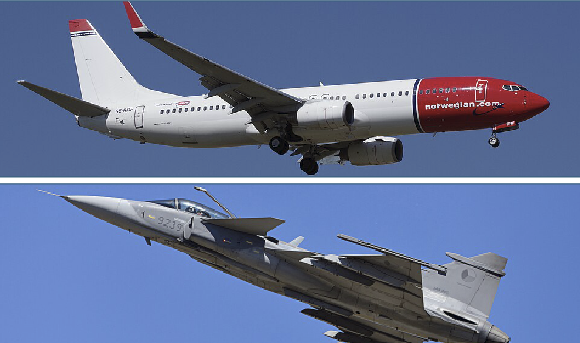
A Boeing 737 800 on approach to Stockholm/Skavsta received a TCAS Resolution Advisory (RA) triggered by two JAS 39 Gripen fighter aircraft climbing nearby. The flight crew complied with the RA, initiating a rapid transition from descent to climb. During this manoeuvre, a cabin crew member positioned at the rear of the aircraft and preparing the cabin was seriously injured, sustaining a fractured foot due to sudden aircraft movements. There was no actual risk of collision, and all aircraft remained within ATC clearances.
The event highlights a systemic limitation: TCAS, ATC procedures and regulatory frameworks are not designed for interaction between civil traffic and high performance military aircraft. The fighters’ high climb rates—approximately 9,000 ft per minute—led to earlier than expected TCAS activation despite adequate separation. Deviations from standard radiotelephony phraseology created ambiguity and increased workload, although they were not causal.
Separately, the investigation identified that the Commander’s proficiency check had technically expired due to incorrect record keeping. In response, the operator strengthened processes to verify qualification validity and added this issue as a risk within the Safety Management System. Air Traffic Control plans to enhance training programmes to include TCAS RA handling.
The report made recommendations focused on improving TCAS training, communication discipline and cross sector awareness to better manage civil–military airspace interactions.
Photo Source: André Gerwing, Wikimedia, Creative Commons 4.0
Photo Source: Bernardo Fernandez Copado, Wikimedia, Creative Commons 2.0