

What Happened
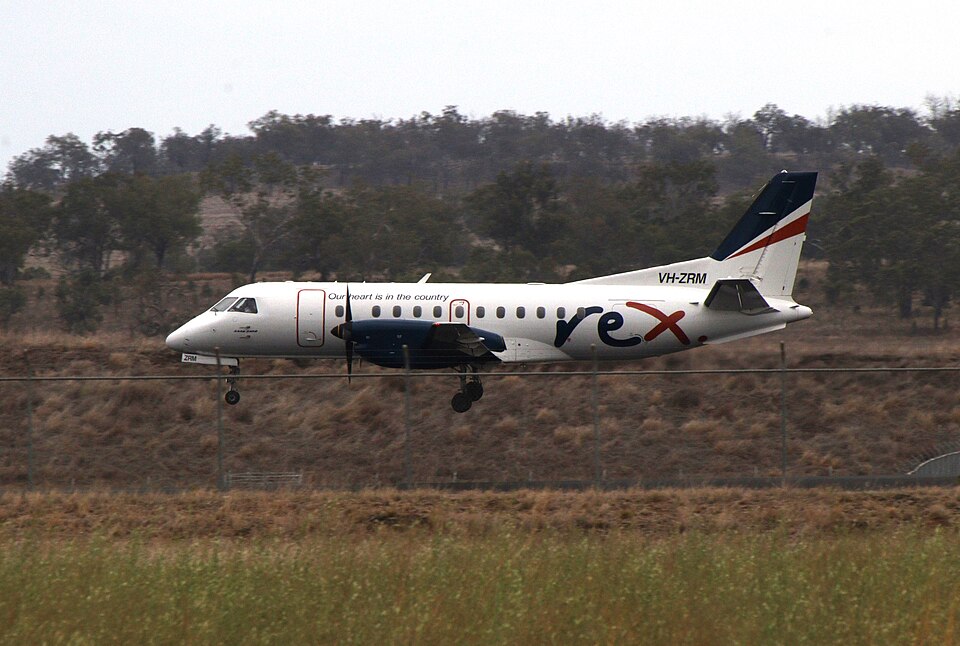
On 19 November 2025, a Regional Express (Rex) Saab 340B aircraft, registered VH‑ZRM, was cleared for take‑off from Townsville for a flight to Hughenden, Queensland. Shortly after take‑off, the first officer (FO) engaged the flight directors and autopilot to follow the standard instrument departure (SID) procedure programmed in the flight management system (FMS). The aircraft immediately commenced a left roll away from the SID track and the pilot in command (PIC) intervened by disengaging the autopilot and resuming manual flight. The crew subsequently requested radar vectors and re‑engaged the autopilot and continued the flight to Hughenden without further incident.
What the ATSB Found
The ATSB found that the PIC likely programmed the SID before engine start using external power, and for reasons undetermined, the SID waypoints subsequently appeared as invalid data in the FMS. This resulted in the aircraft turning away from the expected track when the autopilot was engaged after take‑off as it directed the aircraft to the first active waypoint in the FMS, located at the end of the SID procedure.
In addition, when flight crew programmed the FMS before engine start using external power, the Regional Express procedures did not require them to verify their FMS‑programmed flight plan between engine start and take‑off, which increased the risk of an aircraft departing with a data error.
Furthermore, the PIC misunderstood the operator’s intent of their check of the first FMS waypoint to mean the first waypoint of the company flight plan instead of the first waypoint after take‑off. While it could not be determined if this contributed to the incident, it increased the risk of a data error going undetected.
What has Been Done as a Result
The operator has completed a review of a similar occurrence and identified an omission with the SID entry, in which the SID was inserted into the flight plan, but the active leg was not correctly sequenced. It subsequently issued an operations notice (RNAV Based SID Departures) and notice to air crew (NOTAC: UNS Standby Power Cycle) to address these occurrences. Regional Express is also implementing changes to the Flight crew operating manual workflows to reduce the risk of similar future occurrences.
Safety Message
Data errors happen for many varied reasons, and this incident highlighted one of several risks associated with erroneous data in the FMS. The FMS cannot identify data entry errors in all cases, and therefore it is the responsibility of the pilot(s) to perform this critical function. Data error risks can be reduced by operators and pilots with a comprehensive set of procedures for data entry monitoring and verification before take‑off and inflight.
Image Attribution: Copyright (c) Edward Jones 2023, CC BY-SA 4.0, via Wikimedia Commons