

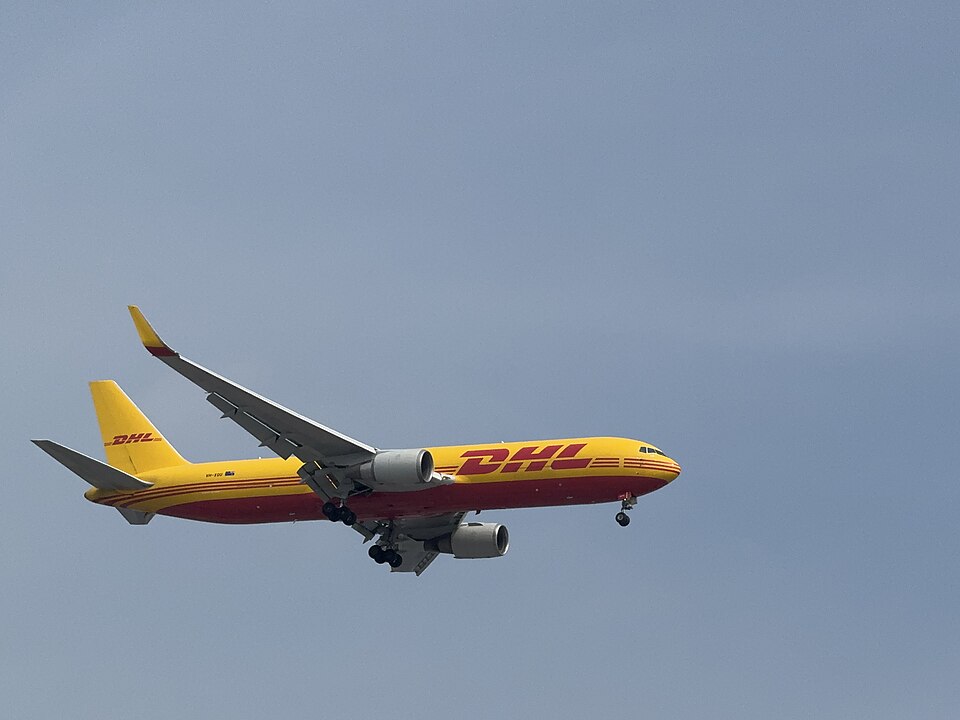
On 10 September 2025, a Tasman Cargo Airlines Boeing 767-300 freighter (VH XQU), operating as Tasman 22 from Hong Kong to Sydney, experienced a serious approach incident while conducting an instrument landing system (ILS) approach to runway 16R at Sydney Airport.
As the aircraft intercepted the ILS glideslope, the autopilot unexpectedly commanded a nose-down pitch and the aircraft began descending away from the correct approach path. The crew continued the approach while the aircraft developed an increasingly high rate of descent. The deviation became significant enough to trigger an Air Traffic Control Minimum Safe Altitude Warning (MSAW), indicating the aircraft had descended below the expected flight path. The autopilot was subsequently disconnected and the aircraft levelled at approximately 1,700 ft—around 1,000 ft below the glideslope. However, the aircraft descended a further 150 ft before the crew commenced a missed approach. A second approach was then carried out using the localiser only, and the aircraft landed safely without further incident.
The Australian Transport Safety Bureau (ATSB) investigation found that the event was initiated by interference with the ILS glideslope signal. Two Airbus A380 aircraft taxiing on the ground at Sydney Airport passed through the ILS critical area and moved in front of the glideslope antenna. Their presence disrupted the glideslope signal being received by the Boeing 767. In response to this interference, the aircraft’s autopilot captured a false glideslope and established the aircraft on an incorrect flight path before indicating to the crew that it had entered a degraded operating mode.
The ATSB also identified several human factors that increased the severity of the event. Despite the degraded autopilot status, the pilot flying continued the approach rather than initiating a missed approach. After disconnecting the autopilot, the pilot did not immediately execute the go-around and the aircraft descended below the localiser segment’s minimum safe altitude. The pilot monitoring also did not effectively oversee the aircraft’s flight path, failed to call out deviations from the approach profile, and did not advise the pilot flying to discontinue the approach.
The investigation highlighted Tasman Cargo Airlines’ procedures and training. The airline permitted flight crews conducting practice auto-lands to exchange pilot flying and pilot monitoring duties before reaching 1,500 ft. In addition, training material did not adequately explain the circumstances under which ILS critical areas would or would not be protected. As a result, the crew assumed the glideslope signal was protected from interference and did not fully appreciate the risk of signal disruption.
In response, Tasman Cargo Airlines has strengthened its procedures by removing the “glideslope out” procedure and requiring crews to conduct an immediate missed approach if glideslope interference is suspected. The airline has also enhanced training, published operational guidance on Sydney runway 16R interference risks, and required the designated pilot flying to take control before commencing an auto-land approach.
Boeing advised that a software update planned for 2027 will improve glideslope capture logic, limit excessive descent angles, provide clearer cockpit warnings, and automatically disconnect the autopilot when unsafe conditions persist.
The ATSB emphasised that while automation enhances safety, flight crews must continuously monitor aircraft behaviour and be prepared to reduce or disconnect automation whenever it behaves inconsistently with the selected flight mode or expected flight path.
Photo Source: LN9267, CC BY-SA 4.0 <https://creativecommons.org/licenses/by-sa/4.0>, via Wikimedia Commons