

More than half the passengers took their carry-on bags despite instructions.
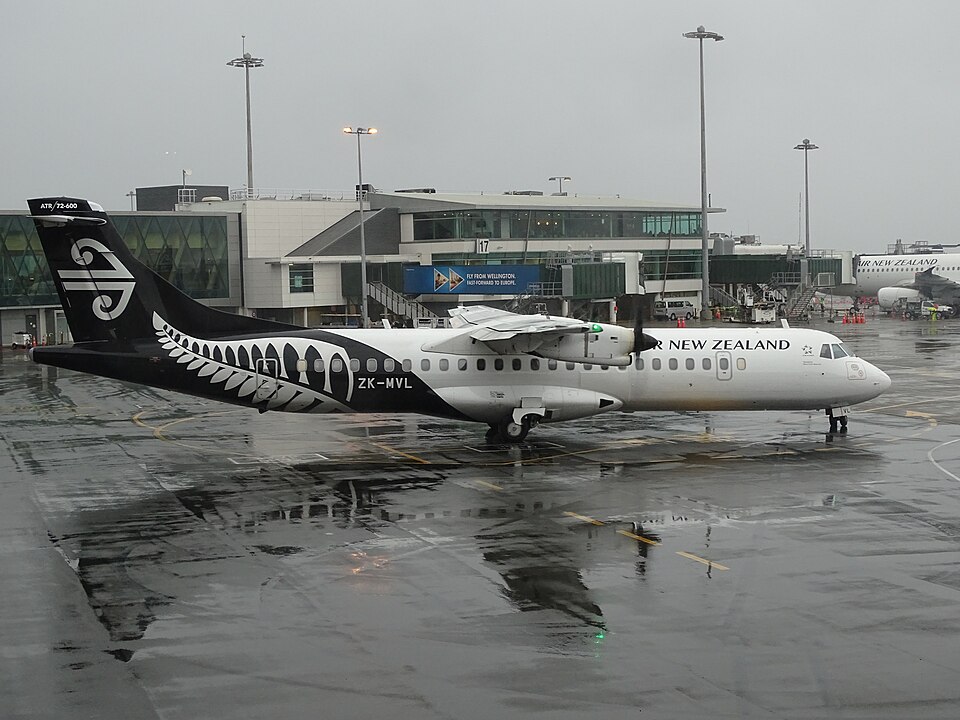
An Air New Zealand ATR72-600 flying Christchurch to Wellington, with 4 crew and 70 passengers, got a left-engine low oil pressure caution at about 380 ft on approach. A fire warning followed below 100 ft. The crew landed and stopped on the runway, shut down both engines and discharged both fire bottles. The fire was almost certainly out after the second bottle, but residual heat kept the warning lit, so the captain ordered an evacuation. Damage was confined to the left engine, and there were only minor injuries.
Why the engine failed. A low-pressure turbine (LPT) blade fractured through fatigue. The resulting imbalance damaged the seals and an oil transfer tube, and oil leaked into the engine and burned. The engine had come out of a Pratt & Whitney Canada (P&WC) overhaul only about 4 flight hours earlier, and a second LPT blade was also cracked. The investigators disagreed on when the cracks formed:
• TSB Canada found the crack was likely present at the overhaul.
• P&WC said the cracks formed after the overhaul inspection, pointing to light oxidation and no penetrant residue in the cracks. Casting micro-porosity acted as a stress raiser.
• TAIC could not determine this definitively, but found the fatigue was likely present at overhaul and should have been detected.
No similar failures have been found in more than 9,000 PW100-series engines.
Crew and ATC Points
• The first Mayday was blocked by a simultaneous tower transmission. The controller had already seen smoke and alerted the rescue fire service (RFS).
• The captain did not verbalise the fire memory items.
• No evacuation radio call was made. Both pilots had removed their headsets without selecting the speaker, so they missed calls from the RFS and tower. The RFS had to switch from firefighting to passenger management without warning.
• The evacuation PA omitted "Attention, attention".
The evacuation took 2 minutes 51 seconds, against the 90-second certification benchmark. Contributing factors:
• The rear-right service door was not used.
• The forward Type III exits were difficult: 12 kg hatches, a step up, then a 1.83 m jump.
• More than half the passengers took their carry-on bags despite instructions.
• With no visible threat, passengers felt little urgency.
• One passenger wearing headphones missed the evacuation call.
• Crew training facilities could not simulate a full evacuation.
• After exiting, at least five passengers walked past the previously burning engine and its propeller.
Recommendations
1. To P&WC (026/26): ensure overhaul quality assurance can detect pre-existing fatigue. P&WC replied that its existing processes already meet the intent, so in effect it will make no change.
2. To Air New Zealand (027/26): improve evacuation training, training realism, safety briefings, safety cards and crew commands. Air New Zealand accepted. Its actions so far:
o aligned cabin commands across all fleets
o strengthened training on the rear service door
o made flight crew evacuation scenarios more realistic
o revised the safety card to show exit routes, a no-baggage symbol and a propeller hazard warning, targeted for December 2026
o put forward a business case for an ATR evacuation trainer, with a funding decision due in November 2026
Photo source: Photo source: Ev Brown, CC BY 2.0, via Wikimedia Commons