

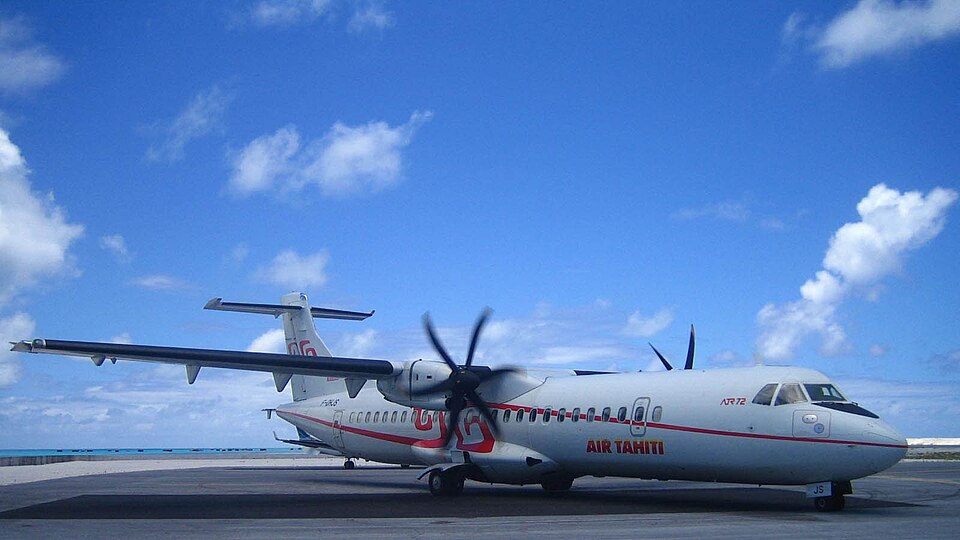
On 29 September 2025, an Air Tahiti ATR72-212A (F-ORVO) experienced a serious incident during final approach when the flight crew encountered a restriction in nose-down elevator control movement. There were 40 passengers and 4 crew on board, and there were no injuries or aircraft damage.
During the final approach, at approximately 80 ft above ground level, the First Officer (Pilot Flying) experienced a blockage when attempting to apply nose-down control input. For around ten seconds, significant forward pressure was applied to the control column, but this had no effect on the control column position, elevator position, or aircraft attitude. The crew recognised the problem and initiated a go-around.
As aircraft pitch increased during the go-around, the First Officer’s control forces reached 44 daN. This triggered the ATR’s Pitch Uncoupling Mechanism (PUM), which is designed to separate the captain’s and first officer’s elevator controls in the event of a jam. The associated PITCH DISC warning activated and the First Officer regained effective control authority.
Following the uncoupling the captain briefly took control, the crew carried out the PITCH DISCONNECT procedure. Tests confirmed the blockage was limited to the captain’s side elevator control system. The first officer resumed PF duties and landed the aircraft without further difficulty.
The investigation confirmed that there had been a restriction of nose-down elevator movement on the captain’s side control chain. However, analysis was unable to determine the specific reason for the restriction.
Investigators eliminated a loose object in the cockpit interfering with controls malfunctions associated with the Gust Lock system and malfunctions associated with the Stick Pusher system.
Air Tahiti, ATR and the BEA inspected the entire elevator control system after the occurrence. No defects were identified. The only unusual finding was the presence of bird nests and nesting materials within the fin structure.
Further inspections found additional nesting material on several Air Tahiti ATR aircraft, including F-ORVO, particularly near areas where elevator control rods pass through the fin structure. Because no other explanation could be identified, BEA and ATR conducted ground tests to determine whether nesting material could cause a flight control blockage. These tests failed to reproduce a control jam, meaning a direct causal link could not be established.
The BEA concluded that the crew experienced a genuine restriction in nose-down elevator movement on the captain’s side. The ATR Pitch Uncoupling Mechanism (PUM) operated exactly as designed and enabled continued safe control of the aircraft. The pilots responded appropriately, worked effectively as a crew and safely completed the flight. Extensive inspections and testing did not identify a technical fault. The investigation could not determine the cause of the elevator control restriction.
The report highlights the importance of robust flight control jam procedures and crew training. The effectiveness of the ATR Pitch Uncoupling Mechanism as a mitigation against flight-control blockages. The need for vigilance regarding wildlife activity and nesting materials in aircraft structures, particularly in tropical operating environments. The value of post-event inspections and fleet-wide checks when unusual contamination or foreign material is discovered.
Image Credit: Wikimedia Commons – AirTahiti.Totegegie.JPG